
HPI graduate's research focuses on maternal and child health
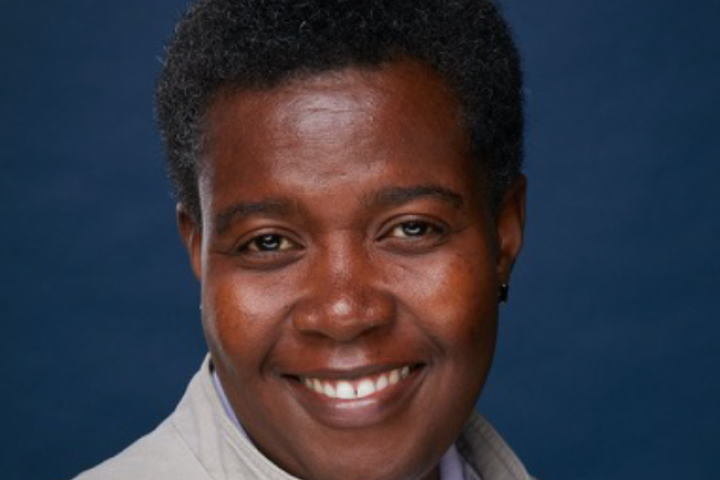
The HPI Research School at UCT congratulates Sarah Dsane-Nsor on completing her PhD in Computer Science, where her work sits at the intersection of digital health, participatory design, and information behaviour.
Sarah began her academic journey drawn to the technical foundations of building systems. Over time, however, her curiosity shifted toward the human dimensions of computing — not simply how systems function, but how they are interpreted, negotiated, and embedded within everyday life. This shift led her into Human–Computer Interaction and digital health research, with a sustained interest in how technology mediates care in contexts where resources are constrained and social networks carry much of the burden of support. Her work now focuses on early parenting and caregiving ecologies.
Her doctoral research examined how parents seek, interpret, and circulate information during the first 1 000 days of a child’s life. In particular, she explored how platforms such as WhatsApp operate as informal yet powerful infrastructures of peer support in low-resource settings. Methodologically grounded in interpretivist traditions and participatory approaches, her work moves beyond extractive research models to centre lived experience, relational care practices, and local knowledge systems. In doing so, it contributes to broader conversations in HCI and digital health on inclusive design, arguing for a shift from individualised technological interventions toward socially embedded systems that reflect collective caregiving realities.
“My time at HPI has been both intellectually rigorous and deeply formative. The lab culture encourages critical engagement, methodological reflexivity, and interdisciplinary dialogue. Being part of a community that spans systems research, design, and social computing pushed me to sharpen my arguments and situate my work within wider computing discourses. What I valued most was the culture of constructive critique, it strengthened not only my research design but also my confidence as an independent scholar. The international collaborations also broadened my understanding of how digital challenges and solutions are framed across different contexts,” she reflects.
Sarah encourages emerging scholars to be intentional about their intellectual trajectory, to seek mentorship, and to cultivate peer communities. “Research is relational work. Your background is not a limitation; it is an analytical resource. Especially for those from underrepresented contexts, your perspectives are not peripheral, they are generative.”
Building on her doctoral work, Sarah intends to expand her research through interdisciplinary collaborations connecting HCI with global health and implementation science. Her goal is to design and evaluate community-centred digital interventions that strengthen primary health care systems and improve equitable access to health information. In the longer term, she aims to establish a coherent research programme that advances participatory and feminist HCI while producing empirically grounded, policy-relevant contributions to digital health practice in sub-Saharan Africa.
Sarah completed her PhD under the supervision of Associate Professor Melissa Densmore.
LinkedIn Profile: Sarah Dsane | LinkedIn
Website: Dsane-Nsor Portfolio | Zite
Sarah's doctoral research was supported by the Hasso Plattner Insititute for Digital Engineering as part of the HPI Research School at UCT.