
Young UCT Computer Scientists Shaping the Future of AI

Artificial intelligence is no longer a distant promise whispered about in research labs—it’s the engine quietly reshaping how we live, work, and connect. From healthcare diagnostics to climate modelling, from creative tools to autonomous systems, AI is redefining what’s possible. At the heart of this transformation is a new generation of innovators: young computer scientists who are not just using AI, but reimagining it.
At UCT, four young lecturers in the Department of Computer Science, namely Dr Zola Mahlaza , Dr Francois Meyer, Ms Krupa Prag and Mr Asad Jeewa, are working to make AI better, intent on making an impact throughout Africa.
Zola Mahlaza
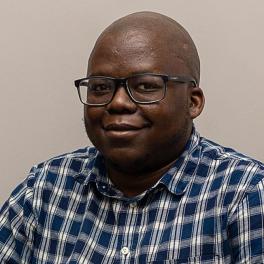
Previously holding a faculty position in the Department of Informatics at the University of Pretoria, Zola completed his PhD with the KnowledgE ENgineering (KEEN) team at UCT. His research focuses on Natural Language Generation (NLG) for African languages, driven by a mission to improve accessibility in education, finance, and healthcare. His broader academic interests include conceptual modelling, knowledge engineering, and human language technologies, all aimed at breaking down linguistic barriers through technical innovation.
His current research in AI focuses on developing linguistically and biologically motivated models designed specifically to support low-resourced African languages.
Francois Meyer
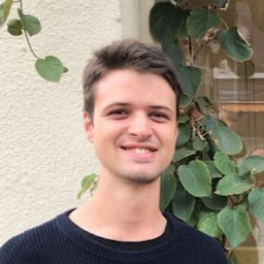
A member of the UCT NLP research group, Francois also completed his PhD at UCT, under the supervision of Jan Buys. His thesis explored new ways to build language models and machine translation systems for the Nguni languages (isiXhosa, isiZulu, Siswati, and isiNdebele). He completed an MSc in Artificial Intelligence at the University of Amsterdam, and undergraduate degrees at Stellenbosch University.
His research focusses on natural language processing (NLP), particularly on building language technologies that work well for languages with limited digital data, such as many South African languages. “What I find most exciting about working in AI is how interdisciplinary it can be. My field, NLP, is at the intersection of computer science and linguistics, so we can use insights from how linguistic theories and what we know about how humans learn language, to inform how we design computational models of language,” says Francois. One of the biggest challenges he faces is the fact that most of South African languages have very little data available, compared to English. “Generative AI requires a lot of data, so the goal of my work is finding ways to make AI language technologies work well even when data is scarce,” he explains.
Krupa Prag
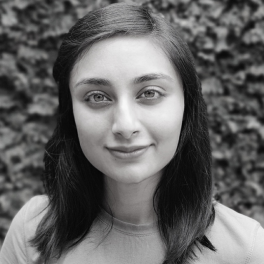
Krupa is driven to bridge the gap between advanced algorithms and real-world efficiency. “My research explores the synergy of Computational Intelligence, Optimisation, and Reinforcement Learning to tackle complex challenges in operations research and control systems. Beyond the lab, I am energised to be on the team designing and teaching UCT’s new AI Major curriculum,” she says. “By balancing theoretical depth with hands-on application, we are striving for our students lead the next wave of global AI innovation.”
Asad Jeewa

After accumulating experience across research and industry, Asad returned to academia in order to make a meaningful impact through research that addresses real-world challenges and teaching that inspires students to do the same. He is currently pursuing a PhD in Artificial Intelligence, investigating how intelligent systems can learn to balance competing goals: a step towards AI that makes more human-like, trustworthy decisions in complex environments. “Working in AI is rewarding because it places you at the forefront of one of the most exciting fields today, with the potential to make a real difference in the world. At the same time, it’s challenging since the field is full of overhyped claims and misconceptions. We have a responsibility to apply our understanding of AI carefully, focusing on doing things correctly rather than rushing to be first,” he says.
What sets these young computer scientists apart is not only technical fluency, but perspective. They are bridging theory and real-world application to make a difference.